
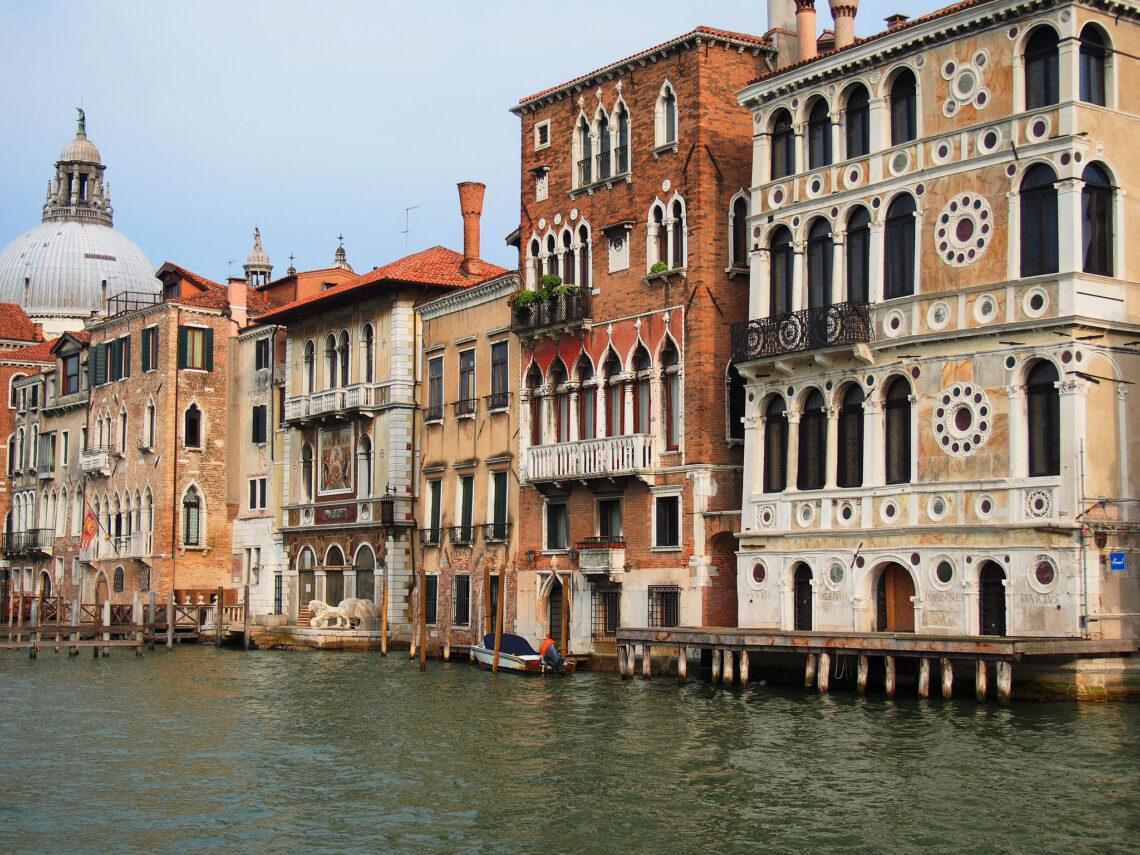
Facades Where Every Crack Tells a Story
Old Italian houses proudly display their age rather than hiding it.
Looking at photos of old Italian facades, you see more than architecture – you see the city’s memory: traces of old signs, exposed brick, nearly vanished fresco fragments, and the rough texture shaped by decades.Every wall carries its own narrative.
Colors That Shape the Gentle Atmosphere of Italian Towns
The warmth of old Italy is created by the tones absorbed into its buildings.
When observing the colors of old Italian building facades, you notice how sun-faded terracotta blends with ochre surfaces, soft brown hues, and delicate pink reflections at dusk.These shades weren’t painted – they formed naturally from sunlight, humidity, and time.
Streets Where Past and Present Walk Together
Italy is most deeply felt on its historic streets.
Walking through Italian streets with historic houses, you notice how narrow passages, stone paving, shadow lines, and the soft echo of footsteps create an atmosphere in which the past hasn’t disappeared – it simply lives quietly beside the present.Each street feels like a small, intimate world.
Small Towns Where Architecture Forms Naturally
The most authentic Italy reveals itself in small, quiet towns away from crowds.
There you see the unusual architecture of small Italian towns – hillside houses, narrow stairways, connected rooftops, and small squares created by everyday life rather than design.
In these places, the ancient Italian quarters for walking feel like a living story rather than a restored exhibit.
The full original post is available on the Love Italy Club website